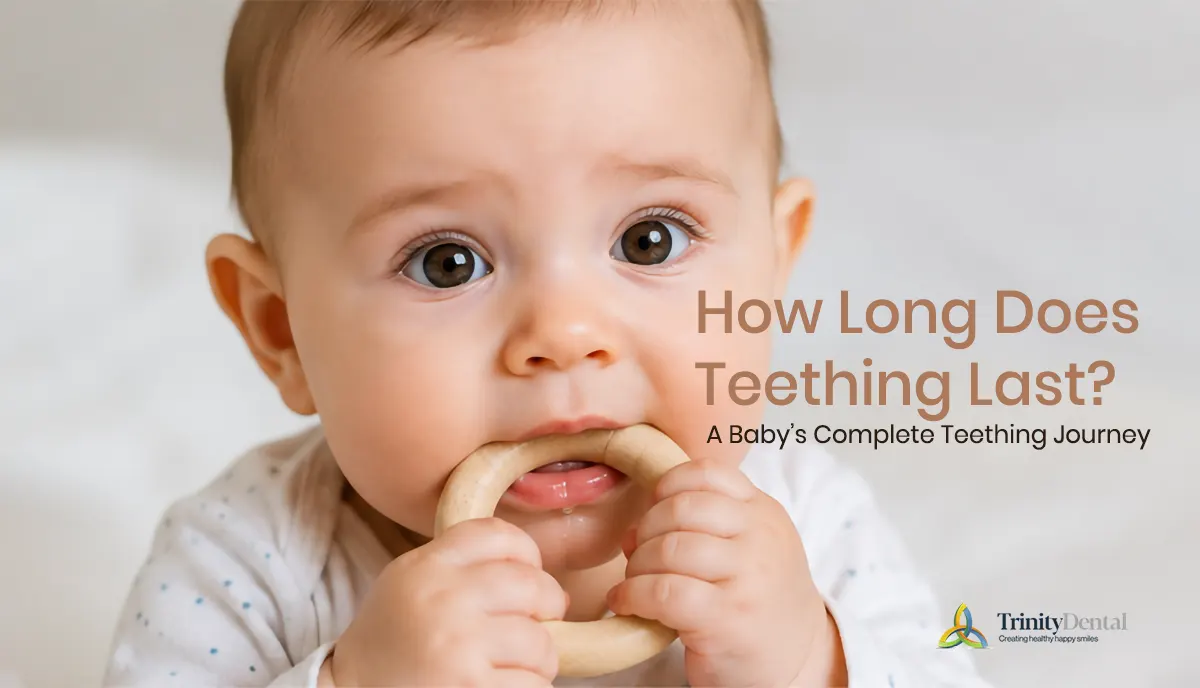
Most babies go through teething for around 6 to 30 months, but the uncomfortable part for each tooth usually lasts much less time. The actual process of a tooth moving through the gum can cause symptoms for a few days before it appears and a few days after. For many babies, the worst discomfort happens during the 3–5 days before a tooth breaks through and the few days afterward.
The full teething journey starts when the first tooth begins developing under the gums and usually ends when the last baby molars appear around age 2–3 years. Some children barely react. Others become noticeably fussy, wake more often, chew everything, and seem like they are having a difficult week every time a tooth arrives.
The part many parents do not realize: teething is not a constant 2-year-long period of pain. It comes in waves. A baby may be completely comfortable for weeks, then suddenly have a few rough days when a new tooth is pushing upward.
Teething Timeline: When Do Babies Get Teeth?
Every baby follows a slightly different schedule. Genetics, family history, and normal development all play a role. Some babies are born with teeth already visible, while others do not get their first tooth until after their first birthday.
A general teething timeline looks like this:
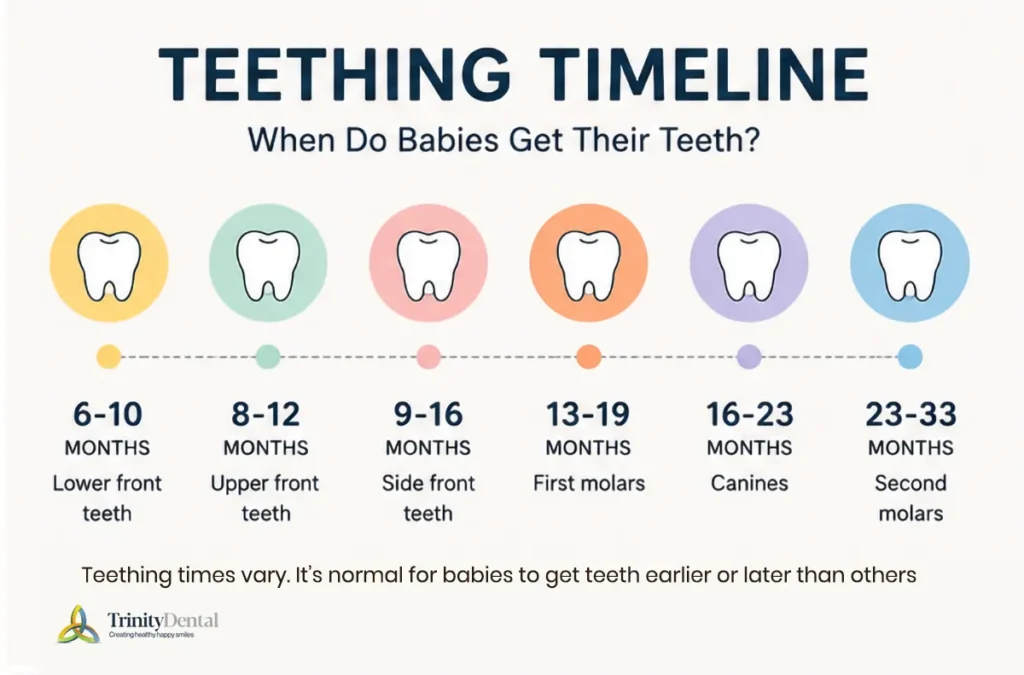
The first teeth usually arrive in pairs, although one tooth may show up days or even weeks before the other. Eruption patterns can vary widely, so a baby being slightly earlier or later does not automatically mean something is wrong.
Baby First Tooth Symptoms: What Parents Usually Notice
The first tooth often announces itself through changes in behavior rather than a visible tooth.
Common baby first tooth symptoms include:
- Increased drooling
- Chewing on fingers, toys, or clothing
- Swollen or tender gums
- Wanting extra comfort or being clingier
- Fussiness, especially in the evening
- Changes in sleeping patterns
- Less interest in solid foods
- Rubbing the face or ears
A common misunderstanding is that every uncomfortable symptom is caused by teething. Babies between 6 and 12 months are also going through major developmental changes. They are learning new skills, becoming more aware of their surroundings, and sometimes experiencing separation anxiety.
So if your baby is suddenly waking more often, teething may be part of it, but it is not always the only reason.
Reasons for Early Teething in Babies
Some babies simply get teeth earlier than expected. Early teething can happen for several reasons:
Genetics
Family history matters more than many parents realize. If you or your partner got teeth early as a baby, your child may follow a similar pattern.
Natural development differences
Some babies develop faster in certain areas and slower in others. Early teeth do not necessarily mean advanced development overall.
Hormonal and biological factors
Tooth development begins before birth. The timing of when teeth become visible depends on how quickly those teeth move through the jaw and gum tissue.
Rare medical causes
Very unusual cases of early teeth can be linked with certain conditions, but most early teething is simply normal variation.
A baby getting their first tooth at 4 months or 10 months can both be completely healthy.
How Long Does Teething Pain Last for Molars?
Molars are usually the teeth parents notice the most because they are larger and have a wider surface area pushing through the gums.
How long does teething pain last for molars?
Usually, molar discomfort can last about one week, although some children have on-and-off symptoms for two weeks as the tooth moves into position.
Molars may cause:
- More intense chewing behavior
- Gum swelling
- Irritability
- Difficulty settling at night
- Changes in eating habits
The reason molars can feel worse is simple: they are bigger teeth. A front tooth creates a smaller opening in the gum, while a molar has multiple raised areas that push through.
Parents often say, “The front teeth were easy, but the molars were completely different.” That experience is very common.
How Long Does a Teething Fever Last?
This is one area where parents often get confusing advice.
Teething may cause a baby to feel slightly warmer than usual because of gum inflammation and increased activity in the body. However, a true fever is generally considered different.
A mild temperature increase may happen around teething, but a fever that is high, persistent, or accompanied by other symptoms should not automatically be blamed on teeth.
If your baby has:
- A temperature around 38°C (100.4°F) or higher
- Poor feeding
- Extreme tiredness
- Breathing problems
- Signs of illness
it is better to check with a healthcare professional.
Teething Diarrhea: How Long Does It Last?
Many parents notice loose stools during teething and wonder:
Teething diarrhea how long does it last?
If stool changes happen around teething, they are usually short-lived and may last a few days.
But there is an important detail: teething itself does not directly cause diarrhea. Babies at this age put everything into their mouths, which increases exposure to germs. They are also starting new foods and becoming more mobile.
Those changes often happen at the same time as teething, which is why they are commonly connected.
Watch for:
- Frequent watery diarrhea
- Blood in stool
- Signs of dehydration
- Fewer wet diapers
- A baby who seems unusually unwell
Those signs suggest something other than normal teething discomfort.
What Actually Helps Teething Pain?
Some teething remedies sound helpful but are not always practical. The goal is simple: reduce gum pressure and help your baby feel comfortable.
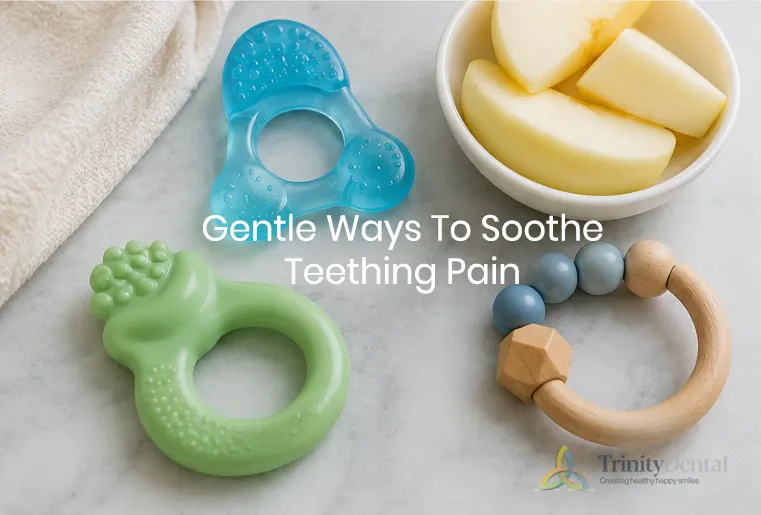
Helpful options:
Cool teething items
A chilled teether can calm irritated gums. Avoid freezing hard objects because they can become too firm and may hurt sensitive gums.
Gentle gum massage
Clean your hands and gently rub the gums with a finger. Many babies like the pressure because it counteracts the feeling of the tooth pushing upward.
Cold foods for older babies
For babies already eating solids, chilled soft foods can sometimes provide relief.
Extra comfort
Teething babies often want more holding and reassurance. The discomfort can make them more sensitive than usual.
Avoid:
- Teething necklaces
- Products with unsafe numbing ingredients
- Anything small enough to become a choking hazard
The U.S. Food & Drug Administration Teething Safety Information has warned parents about certain teething products that can create unnecessary risks.
How To Tell If It Is Teething or Something Else
A useful question is:
“Does my baby seem uncomfortable but otherwise normal?”
Typical teething behavior:
- Chewing
- Drooling
- Mild fussiness
- Tender gums
- Temporary sleep disruption
Something else may be happening if there is:
- High fever
- Persistent crying that cannot be settled
- Refusing fluids
- Severe diarrhea
- Unusual weakness
Teething gets blamed for many things because it happens during a stage when babies are constantly changing.
When Should You See a Dentist About Baby Teeth?
The first dental visit is recommended around the time the first tooth appears or by the first birthday.
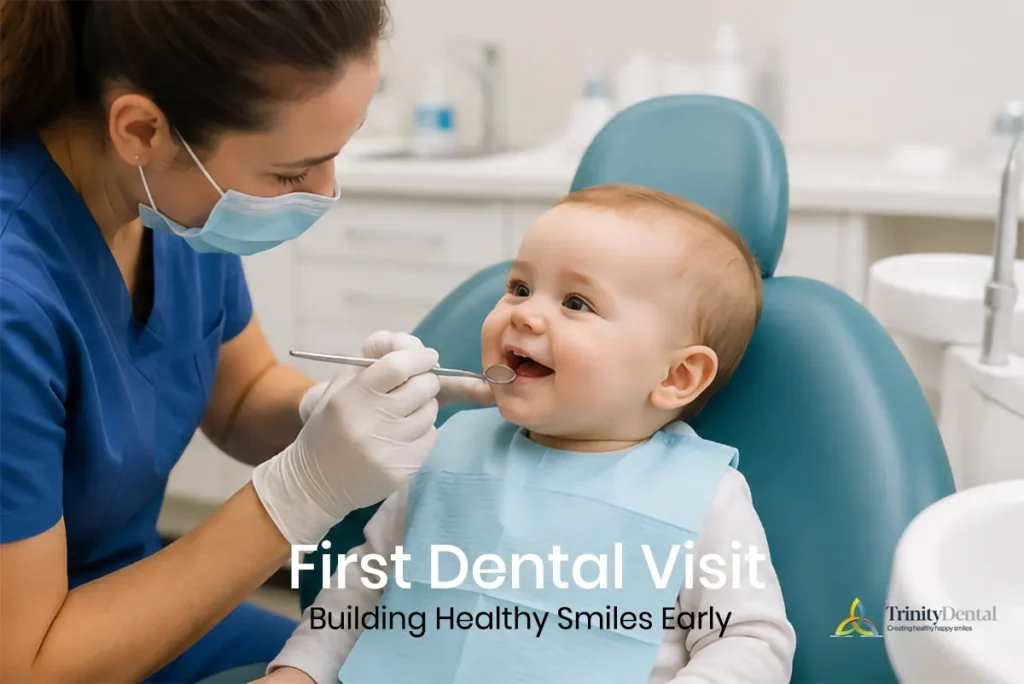
Early dental visits are not about finding problems immediately. They are about teaching parents how to protect new teeth, understand brushing habits, and prevent early childhood cavities.
The American Dental Association MouthHealthy Baby Teeth Guidance recommends early attention to children’s oral health because habits formed during the first years can affect future dental health.
Frequently Asked Questions About Teething
Yes, the overall teething stage can last years because different teeth appear at different times. Individual tooth discomfort usually lasts only several days.
Many babies become fussier during tooth eruption because of gum pressure and discomfort. However, constant crying usually means something else may also be bothering them.
A slight increase in saliva and mouth activity may happen, but a heavy runny nose or congestion is usually caused by a cold or another issue.
Temporary changes in appetite are common. Babies often prefer softer foods or smaller amounts when their gums feel sore.
Why Families Choose Trinity Dental
At Trinity Dental, the focus is on making dental care feel comfortable and understandable for patients and families. Parents often want more than just treatment — they want clear explanations, guidance they can trust, and a dental team that takes the time to understand their concerns.
Whether you need advice about children’s dental development, routine care, or maintaining healthy smiles from an early age, Trinity Dental provides a patient-focused approach built around professional care and practical support.
If you have questions about your child’s teeth, book an appointment with Trinity Dental and get personalised advice from a dental team that understands every stage of oral health.