Turkey teeth can go wrong in ways that are far more serious than simply ending up with a smile that looks unnatural. Some people experience persistent pain or sensitivity, while others develop inflamed gums, bite problems, loose or damaged restorations, or problems with the natural teeth underneath.
The difficult part is that not every problem can be seen in a mirror. A crown can look perfectly acceptable while the tooth underneath needs attention.
If something feels wrong after cosmetic dental treatment abroad, the priority is to find out why before deciding what should be replaced. Removing and replacing restorations without understanding the underlying problem can sometimes lead to unnecessary treatment.
What Can Actually Go Wrong?
There isn’t one typical type of complication. Some problems are mainly cosmetic, while others affect the health or function of the teeth.
Pain and persistent sensitivity
Sensitivity can occur after dental treatment, but pain that continues, worsens or occurs without an obvious trigger should not simply be accepted as part of the process.
The cause could involve the restoration, the way the tooth was prepared, the bite, the gums or the tooth underneath. A dental examination is needed to distinguish between these possibilities.
Inflamed or bleeding gums
Red, swollen or bleeding gums around crowns deserve attention, particularly when the problem persists.
Restorations with unsuitable contours or margins can make cleaning more difficult, allowing plaque to accumulate. Existing gum problems can also become more noticeable after extensive cosmetic treatment.
Bleeding is therefore not something to ignore simply because new crowns have been fitted.
Bulky teeth or bite problems
A smile can look good in a photograph and still feel wrong when you eat or speak.
Patients may notice that their teeth feel too large, their lips feel different, certain teeth touch first when biting, or chewing feels uncomfortable. Changes in the bite can also make some teeth receive more force than intended.
Cosmetic dentistry therefore has to work mechanically as well as visually.
Problems underneath the restorations
This is where things can become more complicated.
Decay, structural damage or problems affecting the dental pulp may develop underneath or around a restoration. These problems may not be obvious from looking at the finished smile.
The General Dental Council has highlighted irreversible tooth-tissue loss and the possibility of pulp death as material risks that should be discussed when preparing a vital tooth for a full-coverage crown.
A dentist assessing failed cosmetic dentistry therefore needs to look beyond the crowns themselves.
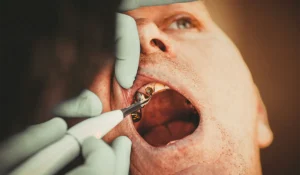
Turkey Teeth Gone Wrong Pictures
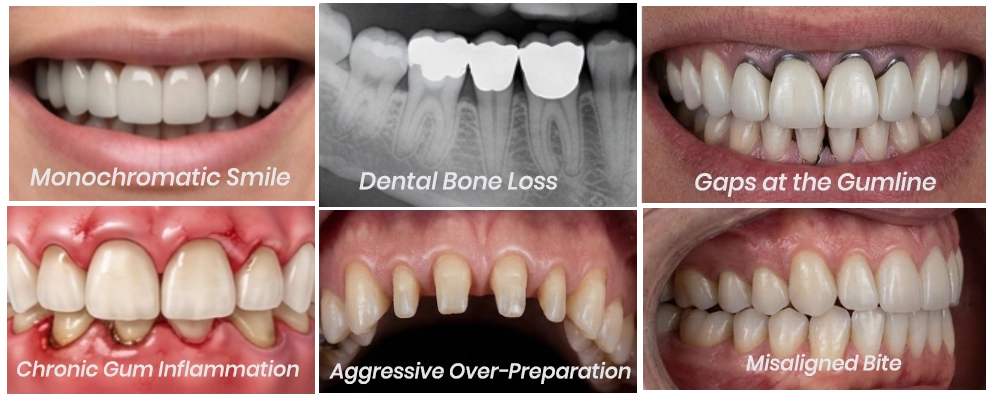
The images below highlight common aesthetic and structural failures resulting from poorly executed full-coverage restorations. While these examples show highly visible exterior or structural issues, they only tell part of the story. Hidden complications such as decay developing beneath a crown, internal nerve damage, microscopic margin gaps, or functional bite misalignment cannot be fully evaluated through a photograph alone.
Please use these images as educational examples rather than a tool to self-diagnose your own dental work..
Why Do Turkey Teeth Go Wrong?
The problem is not simply that treatment took place in Turkey. Dental treatment can succeed or fail anywhere.
The more important questions are how extensive the treatment was, whether it was clinically appropriate, how the teeth were prepared and what aftercare was available.
Treatment that is more extensive than necessary
One of the most important questions before cosmetic treatment is whether each individual tooth actually needs treatment.
For example, someone may have one damaged or discoloured front tooth but choose crowns on many otherwise healthy teeth to create a completely uniform smile.
A useful question to ask is:
“Would this tooth need a crown if I wasn’t having a cosmetic smile makeover?”
This does not mean crowns are always inappropriate. It simply encourages the decision to be based on the condition and needs of each tooth rather than appearance alone.
Insufficient planning
Good cosmetic dentistry involves more than selecting a shade and tooth shape.
The dentist needs to consider existing restorations, tooth structure, gum health, bite, previous treatment and the patient’s expectations.
The amount of natural tooth preparation also matters because removed tooth structure cannot simply be restored naturally later.
Limited follow-up after returning home
A complication may not appear immediately.
A crown might become loose weeks later. Gum inflammation may persist. A tooth may begin hurting months afterwards.
If the original dentist is abroad, the patient may then need another dentist to investigate treatment they did not carry out and may have limited records for.
The General Dental Council recommends finding out who will provide aftercare and what happens if remedial treatment is required after returning home.
What Should You Do If Your Turkey Teeth Have Gone Wrong?
The first step is an examination, not automatically replacing everything.
A dentist may need to assess the restorations, gums, bite and natural teeth. X-rays or other investigations may be appropriate depending on the symptoms and clinical findings.
Take your dental records with you
If you have them, bring:
- Treatment plans
- X-rays and scans
- Before-and-after photographs
- Details of the crowns or veneers
- Information about the materials used
- Dates of treatment
- Details of the original clinic
This information can make diagnosis much easier.
Without records, the dentist may need to establish from scratch which teeth were treated, what was removed and what restorations were placed.
Don’t assume every crown needs replacing
A problematic crown does not automatically mean the entire smile needs rebuilding.
One restoration may need attention while others remain satisfactory. In another case, several teeth may have underlying problems.
The treatment should follow the diagnosis.
That distinction is important because replacing a restoration is not the same thing as treating the tooth underneath it.
Can Turkey Teeth Gone Wrong Be Fixed?
Often, complications can be treated, but there is no single repair procedure that works for every patient.
Depending on the findings, treatment could involve:
- Managing gum inflammation
- Treating decay
- Treating an infected tooth
- Adjusting a restoration
- Replacing individual crowns
- Replacing several restorations
- Root canal treatment where clinically necessary
- Further restorative treatment
The problem may lie with the restoration itself, the natural tooth underneath, or both. Identifying the source is important because replacing a crown alone will not resolve an underlying dental problem.
A new crown cannot solve an untreated infection or replace natural tooth structure that has already been removed.
Why Repairing Turkey Teeth Can Be More Complicated
Repair treatment can take longer than the original cosmetic procedure because the dentist first needs to understand what has happened.
Some restorations may need to be removed before the underlying teeth can be properly assessed. Gum inflammation may need to be controlled before new restorations are placed. A painful tooth may require treatment before a replacement crown is considered.
There is also a long-term issue.
If substantial natural tooth structure was removed during the original treatment, the options available later may be more limited. This is one reason extensive cosmetic treatment should be viewed as a long-term dental commitment rather than simply a way of changing the appearance of a smile.
How Much Does It Cost to Fix Turkey Teeth?
There is no reliable single price because the cost depends on the condition of the individual teeth.
Factors include:
- Number of affected teeth
- Condition of the natural teeth
- Existing restorations
- Gum treatment
- Decay or infection
- Root canal treatment, if required
- Removal of existing crowns
- Replacement restorations
- Complexity of the bite
A photograph cannot provide an accurate treatment estimate because it cannot show what is happening beneath the restorations.
The NHS recommends considering potential additional costs when arranging dental treatment abroad, including what happens if further treatment becomes necessary.
Can a UK Dentist Fix Turkey Teeth?
Yes. A UK dentist can assess someone who has received dental treatment abroad and determine what treatment is required.
However, that does not necessarily mean every crown will be removed immediately.
The dentist may first need to assess the underlying teeth, gums and bite. If there is an urgent problem, the immediate priority may be to stabilise it before considering longer-term restorative or cosmetic treatment.
NHS England has guidance covering patients who develop complications following self-funded dental treatment, including treatment received abroad.
What Should You Ask Before Getting Turkey Teeth?
If you are considering treatment abroad, don’t base the decision only on the advertised price or the final smile.
Ask:
- Why does each tooth need treatment?
- How much natural tooth will be removed?
- Are there less invasive alternatives?
- Who will perform the treatment?
- What qualifications do they have?
- What happens if something goes wrong after I return?
- Who provides aftercare?
- Who pays for remedial treatment?
- What does the guarantee actually cover?
- Will I receive copies of my dental records and X-rays?
Frequently Asked Questions
No. The term does not describe a clinical condition, and dental treatment can succeed or fail anywhere. The suitability and quality of the individual treatment matter.
Crown preparation permanently removes some natural tooth structure. The extent of preparation and the long-term condition of the teeth are therefore important considerations.
Pain can come from the restoration, tooth underneath, gums or bite. Persistent pain should be professionally assessed rather than assumed to be normal.
Often, yes. However, the underlying teeth and gums should be assessed first to determine whether replacement alone will solve the problem.
They can make cleaning difficult if restoration contours or margins are unsuitable. Existing gum disease can also contribute to inflammation around restorations.
There is no fixed lifespan for every crown or veneer. Longevity depends on the restoration, underlying tooth, bite, oral hygiene and ongoing dental care.
Why Choose Trinity Dental?
If you are concerned about Turkey teeth, the first step should be understanding what is actually happening rather than automatically replacing everything. That may mean investigating a painful tooth, assessing gum health, checking a problematic crown or determining whether particular restorations genuinely need replacing. The aim is to understand the problem first and then recommend treatment based on the condition of your teeth.
If you have returned from dental treatment abroad with pain, sensitivity, bleeding gums, loose crowns or concerns about the appearance or function of your teeth, contact Trinity Dental to arrange an assessment and discuss your options