Teeth whitening strips have become one of the most popular ways to brighten a smile without visiting the dentist. They’re affordable, easy to use at home, and can noticeably reduce stains caused by coffee, tea, wine, smoking, and natural ageing. But before using them, many people ask the same question:
Are teeth whitening strips safe?
The short answer is yes when used correctly.
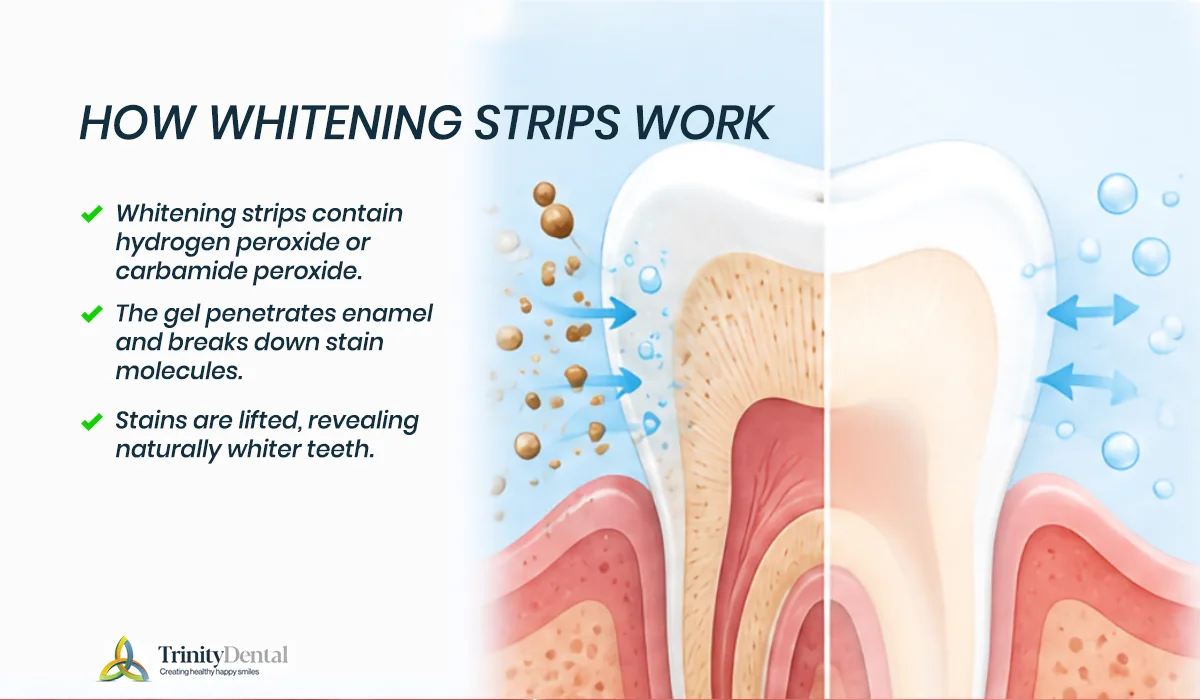
Most whitening strips contain hydrogen peroxide or carbamide peroxide, ingredients that dentists have safely used in professional whitening treatments for many years. When applied according to the manufacturer’s instructions, these ingredients effectively lighten the natural colour of teeth without permanently damaging healthy enamel.
However, whitening strips aren’t suitable for everyone. Overusing them, leaving them on for longer than recommended, or using them on teeth with untreated dental problems can lead to sensitivity, gum irritation, or uneven results.
Understanding how whitening strips work, their benefits, possible side effects, and who should avoid them will help you decide whether they’re the right choice for your smile.
Are Teeth Whitening Strips Safe?
For most healthy adults, teeth whitening strips are considered safe when used as directed.
Contrary to a common misconception, whitening strips don’t scrub or sand away stains. Instead, the whitening gel penetrates the enamel and breaks down stain molecules trapped inside the tooth. As these stain molecules become colourless, the teeth appear brighter.
This process doesn’t permanently remove enamel. Research shows that peroxide-based whitening products may temporarily change the moisture balance within enamel, but healthy saliva naturally helps restore the tooth surface after treatment.
The biggest risk usually isn’t the whitening ingredient itself it’s misuse. Problems are far more likely when people:
- Use whitening strips more often than recommended.
- Leave the strips on longer than instructed.
- Whiten teeth that have untreated cavities or damaged enamel.
- Ignore ongoing tooth sensitivity and continue treatment.
When used responsibly, whitening strips provide an effective and predictable way to improve the appearance of stained teeth with minimal risk.
Why Some People Experience Tooth Sensitivity
Not everyone reacts to whitening strips the same way.
Some people complete an entire whitening course without discomfort, while others notice sharp sensitivity to cold drinks or even cold air after only a few applications.
This happens because peroxide temporarily reaches the inner layers of the tooth. If your enamel is naturally thinner, your gums have receded, or you have tiny cracks or worn fillings, the whitening gel can reach the nerve more easily, causing temporary sensitivity.
In most cases, this discomfort lasts only a day or two after treatment and gradually disappears. However, severe or persistent pain could indicate an underlying dental problem rather than a reaction to the whitening strip itself.
For this reason, it’s always best to have cavities, cracked teeth, leaking fillings, or gum disease treated before beginning any whitening treatment.
Benefits of Teeth Whitening Strips
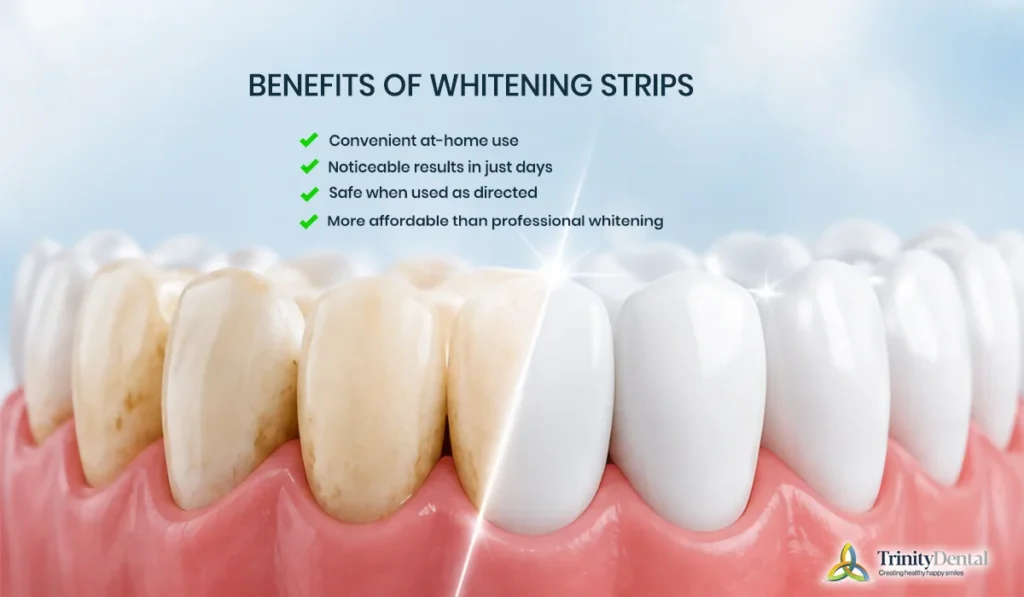
Whitening strips have become a popular alternative to professional whitening because they offer noticeable improvements without the higher cost of in-office treatments.
Some of the main benefits include:
- Affordable compared with professional whitening procedures.
- Convenient to use at home with minimal preparation.
- Gradual whitening that often looks more natural than dramatic one-day treatments.
- Clinically proven peroxide ingredients used in many dental whitening systems.
- Effective at reducing common stains caused by coffee, tea, wine, smoking, and ageing.
- Easy to maintain with occasional touch-up treatments when recommended.
Many people also experience a boost in confidence after whitening. A brighter smile often makes people feel more comfortable in photographs, social situations, and professional meetings. The goal isn’t achieving an unnaturally white smile it’s creating a cleaner, healthier-looking appearance that complements your natural teeth.
Risks and Side Effects of Teeth Whitening Strips
Like any cosmetic dental treatment, whitening strips have potential side effects. Fortunately, most are mild, temporary, and can be reduced by following the instructions carefully.
Tooth Sensitivity
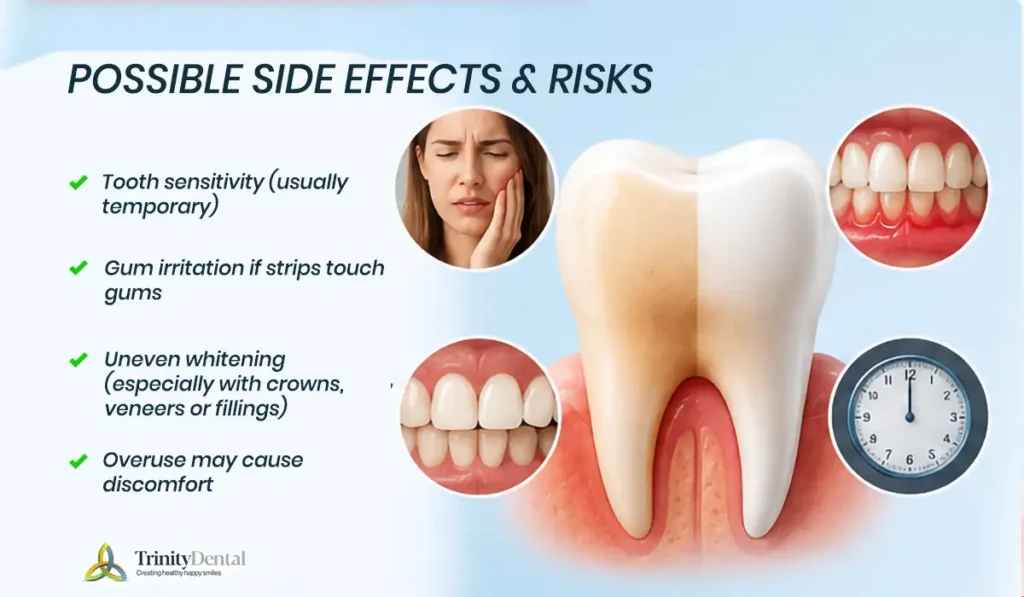
Temporary tooth sensitivity is the most common side effect.
During whitening, peroxide passes through the enamel to break apart stain molecules. While this process is effective, it can temporarily increase the tooth’s sensitivity to cold foods, drinks, and air.
Most people notice the discomfort improving within a few days after finishing treatment.
If sensitivity becomes severe or continues after treatment ends, stop using the strips and consult your dentist.
Gum Irritation
Whitening gel is designed for teeth not soft gum tissue.
If the strip overlaps onto your gums, you may experience:
- Temporary white patches
- Mild burning or tingling
- Gum soreness
- Slight peeling of the outer gum tissue
These symptoms are usually temporary and resolve once the whitening product is no longer in contact with the gums.
Uneven Whitening
Not every tooth whitens at the same rate.
Areas with thinner enamel may appear lighter sooner than thicker areas, while crowns, veneers, fillings, and bonding won’t change colour at all.
Some people also notice small white spots immediately after treatment. These usually become less noticeable as the teeth naturally rehydrate over the next few days.
How to Use Teeth Whitening Strips Safely
Using whitening strips correctly greatly reduces the risk of sensitivity and irritation while helping you achieve more even results.
Follow these simple guidelines:
- Read and follow the manufacturer’s instructions carefully.
- Don’t leave the strips on longer than recommended.
- Avoid using whitening strips more frequently than directed.
- Apply the strips to clean, dry teeth for better adhesion.
- Make sure the strips don’t overlap onto your gums.
- Don’t eat, drink, or smoke while wearing the strips.
- Avoid whitening if you have untreated cavities, cracked teeth, or active gum disease.
- Consider using a toothpaste designed for sensitive teeth before and during treatment if you’re prone to sensitivity.
It’s also a good idea to limit coffee, tea, red wine, and tobacco during your whitening course. Reducing exposure to staining substances gives the whitening treatment the best chance of producing long-lasting, even results.
Remember that more whitening isn’t always better. Following the recommended treatment schedule is usually more effective than trying to speed up the process by using extra strips or extending the wear time.
Many of the problems people associate with whitening strips aren’t caused by the product they’re caused by overuse or incorrect application.
In short, patience produces healthier teeth and better cosmetic results.
Are Teeth Whitening Strips Permanent?
No. Teeth whitening strips do not provide permanent results.
Whitening treatments brighten your natural teeth by breaking down stain molecules inside the enamel, but they don’t prevent new stains from developing. Everyday habits such as drinking coffee, tea, red wine, smoking, or eating dark-coloured foods gradually cause teeth to become discoloured again.
For most people, results last between six months and two years, depending on their lifestyle, oral hygiene, and diet. People who smoke or frequently consume staining foods and drinks may notice the whitening fading sooner than those with healthier habits.
To help your results last longer:
- Brush twice a day with fluoride toothpaste.
- Floss daily to remove plaque between teeth.
- Rinse your mouth after drinking coffee, tea, or wine.
- Limit tobacco use.
- Schedule regular dental cleanings.
- Only use touch-up whitening treatments when recommended by the manufacturer or your dentist.
Maintaining good oral hygiene is often the best way to preserve your brighter smile without overusing whitening products.
Are Teeth Whitening Strips Safe to Swallow?
Whitening strips are designed to be used on your teeth not swallowed.
Accidentally swallowing a small amount of whitening gel mixed with saliva is unlikely to cause serious harm in a healthy adult, although it may cause mild stomach discomfort or temporary throat irritation.
However, swallowing larger amounts of whitening gel should be avoided.
If you frequently notice gel running into your mouth, it may be because:
- The strips don’t fit your teeth properly.
- They weren’t applied firmly enough.
- You’re talking while wearing them.
- You’re leaving them on longer than instructed.
Drying your teeth with a tissue before applying the strips can help them stick more securely and reduce gel leakage.
If a child or anyone accidentally swallows a significant amount of whitening gel, seek medical advice or contact your local poison information service.
Are Teeth Whitening Strips Safe for Kids and Teens?
Children
In most cases, teeth whitening strips are not recommended for children. (Read: American Academy of Pediatric Dentistry Research )
Children’s permanent teeth are still developing, and their enamel is thinner than that of adults. The inner part of the tooth, known as the pulp, is also proportionally larger, making young teeth more sensitive to whitening chemicals.
Whitening during this stage may increase discomfort and produce uneven results as new permanent teeth continue to erupt.
If a child has discoloured teeth, it’s important to identify the underlying cause rather than trying to whiten them. A dental examination can determine whether the discolouration is due to staining, enamel defects, medication, or another dental condition.
Teenagers
For older teenagers with fully erupted permanent teeth, whitening may be appropriate but only after a dental examination.
A dentist can check for cavities, gum disease, worn enamel, or existing sensitivity before recommending any whitening treatment.
It’s also important to remember that naturally healthy teeth are not always bright white. Many people inherit teeth with a naturally warmer or slightly yellow shade because of the colour of the underlying dentin.
Trying to achieve the extremely white smiles often seen on social media can lead to unnecessary or excessive whitening.
Who Should Avoid Teeth Whitening Strips?
Although whitening strips are safe for many people, they aren’t suitable for everyone.
Speak with your dentist before using whitening strips if you have:
- Untreated tooth decay or cavities.
- Active gum disease.
- Cracked or chipped teeth.
- Loose or damaged fillings.
- Severe tooth sensitivity.
- Recently completed dental surgery.
- Extensive crowns, veneers, or bonding on your front teeth.
These conditions can increase discomfort or affect your final whitening results.
Pregnant or breastfeeding women are also generally advised to postpone cosmetic whitening treatments. Although there is no strong evidence that whitening strips are harmful during pregnancy, there is limited research confirming their safety. Since whitening is an elective cosmetic procedure, many dentists recommend waiting until after pregnancy and breastfeeding.
Teeth Whitening Strips vs Other Whitening Options
Different whitening methods offer different advantages depending on your goals, budget, and oral health.
| Whitening Method | Whitening Results | Sensitivity Risk | Best For |
|---|---|---|---|
| Whitening Strips | Moderate to High | Moderate | Mild to moderate staining at home |
| Professional Dentist Whitening | High | Moderate (professionally managed) | Fast, predictable results |
| Custom Whitening Trays | High | Low to Moderate | Gradual whitening under professional supervision |
| Whitening Toothpaste | Low | Low | Maintaining existing whitening results |
Whitening strips offer an excellent balance between convenience, affordability, and effectiveness. However, professional whitening remains the best option for people seeking faster results, more even whitening, or treatment tailored to their individual dental needs.
Frequently Asked Questions
Many people notice a small improvement within three to five days, while the full results usually appear after completing the entire treatment course.
When used according to the manufacturer’s instructions, peroxide-based whitening strips are not considered harmful to healthy enamel. Problems are far more likely to occur when strips are overused or applied to damaged teeth.
Peroxide temporarily reaches the inner layers of the tooth to break down stain molecules. This can increase sensitivity for a short time, particularly in people with thin enamel, exposed roots, or existing dental problems.
Yes, but whitening strips only lighten natural teeth. Fillings, crowns, veneers, and bonding will remain the same colour, which may create uneven-looking results if they are visible when you smile.
Always follow the treatment schedule provided by the manufacturer or your dentist. Whitening more frequently than recommended won’t necessarily improve your results and may increase sensitivity.
Why Choose Trinity Dental?
Before recommending any whitening treatment, our experienced team carefully examines your teeth and gums to identify problems such as cavities, worn enamel, leaking fillings, or gum disease that could affect your comfort or results.
Whether you’re considering whitening strips or professional whitening, we’ll help you choose the safest and most effective option based on your individual needs not a one-size-fits-all approach.
Our goal is to achieve a brighter smile that looks natural, feels comfortable, and supports your long-term oral health.
Ready to Brighten Your Smile?
If you’re considering teeth whitening but aren’t sure which option is right for you, we’re here to help.
Book a consultation with Trinity Dental to receive personalised advice and professional guidance based on your oral health. We’ll help you achieve a brighter, healthier smile safely and confidently.