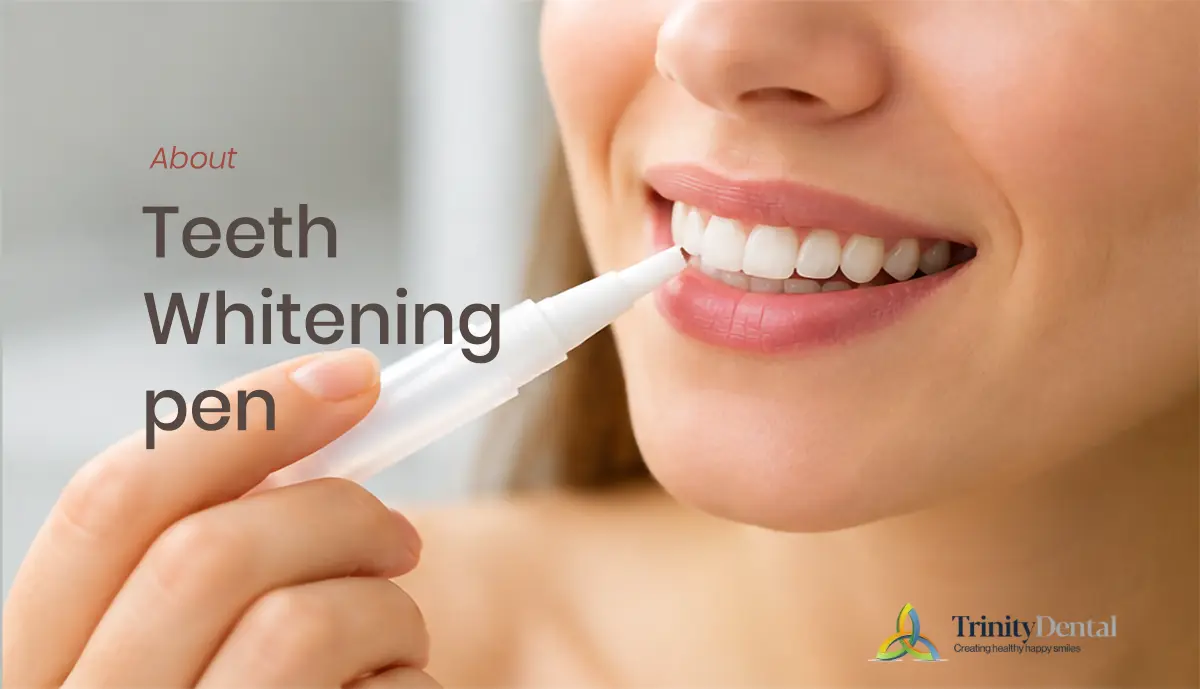
Yes teeth whitening pens can work, but only if your expectations match what they’re actually designed to do.
Used correctly, a good-quality whitening pen can noticeably brighten mild surface stains from coffee, tea, red wine, or smoking. If your teeth have gradually yellowed over time, consistent use may lift them by around one or two shades. That part is real.
Where most people get disappointed is in what these pens can’t do.
They don’t rebuild worn enamel. They don’t change the colour of crowns, veneers, fillings, or bonding. Deep grey, brown, or internally stained teeth usually won’t respond much, no matter how often you apply the gel. If the stain sits inside the tooth rather than on the enamel, the whitening agent simply isn’t strong or penetrating enough to make a dramatic difference.
Most dentists see whitening pens as a maintenance tool rather than a full whitening treatment. They’re useful for touching up your smile between professional whitening sessions or before an event when you want a quick, modest improvement. Expecting the kind of transformation shown in edited adverts usually leads to disappointment.
Something patients rarely realize is that teeth often look brighter immediately after whitening because they’re temporarily dehydrated. Over the next day or two, the enamel reabsorbs moisture and a small amount of that brightness naturally fades. That isn’t the whitening “wearing off” it’s simply your teeth returning to their normal hydration level.
The real question isn’t whether whitening pens work.
It’s whether they’re the right choice for your teeth.
Why Whitening Pens Work Better for Some People
Two people can use the same whitening pen exactly as directed and end up with completely different results.
That’s because whitening isn’t determined only by the product. It’s determined by the type of stain you have.
Dentists generally divide stains into two categories.
Surface (Extrinsic) Stains
These develop on the outer enamel from everyday habits such as:
- Coffee
- Tea
- Red wine
- Curry and tomato-based sauces
- Smoking or vaping
- Poor plaque control
These are exactly the stains whitening pens handle best, because the active ingredients can reach the discoloured enamel directly.
Internal (Intrinsic) Stains
These occur beneath the enamel.
Common causes include:
- Certain antibiotics during childhood
- Dental trauma
- Root canal treatment
- Natural ageing
- Excess fluoride exposure while teeth were developing
A whitening pen has very little effect on these stains because the bleaching agent cannot easily reach the deeper tooth structure.
One clue dentists often notice but most patients don’t is that if every tooth is evenly yellow, whitening usually works reasonably well. When only one tooth is much darker than the others, the cause is often internal, and a whitening pen isn’t likely to solve the problem.
Do Teeth Whitening Pens Work as Well as Professional Whitening?
Not really but that doesn’t mean they’re useless.
It simply means they’re solving a different problem.
Professional whitening is designed to produce a significant colour change under controlled conditions. Dentists can safely use stronger whitening agents while protecting the gums and monitoring sensitivity.
A whitening pen focuses on convenience.
You can carry it in a pocket, use it before bed, or apply it after brushing. It’s quick, inexpensive, and requires very little preparation.
Whitening Pen vs Professional Whitening
| Feature | Teeth Whitening Pen | Professional Whitening |
|---|---|---|
| Best for | Mild surface stains | Mild to severe staining |
| Whitening speed | Gradual (days to weeks) | Faster (often one visit or a few days) |
| Strength | Lower concentration of peroxide | Higher concentration, supervised by a dentist |
| Cost | Lower | Higher |
| Custom treatment | No | Yes (custom trays, in-office options) |
| Suitable for deep stains | Limited effect | Much more effective |
Interestingly, dentists sometimes recommend both.
A patient may complete professional whitening first, then use a whitening pen every few weeks to slow down new staining. Used that way, the pen becomes part of maintenance rather than the primary treatment.
How Whitening Pens Actually Remove Stains
Many people imagine the gel “scrubbing away” stains.
That’s not what happens.
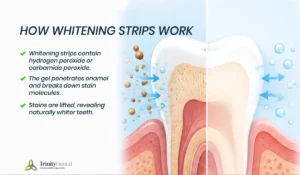
The active ingredients (usually hydrogen peroxide or carbamide peroxide) release oxygen molecules that pass into the microscopic pores of enamel. These oxygen molecules break apart the coloured compounds responsible for stains.
Think of it less like polishing a wall and more like fading fabric exposed to sunlight over time.
This is also why results aren’t immediate.
Each application breaks down a small percentage of stain molecules. Repeated treatments gradually make the tooth appear lighter because fewer dark pigments remain.
Another detail people rarely hear is that enamel itself is naturally translucent.
The colour you see isn’t just enamel it’s also influenced by the dentin underneath. As enamel becomes thinner with age, the naturally yellow dentin shows through more clearly. No whitening pen can make thin enamel thicker.
That explains why some older adults notice only modest improvements despite following every instruction perfectly.
How to Use a Teeth Whitening Pen Correctly
Many disappointing results come from technique rather than the product itself.
A few small mistakes can dramatically reduce how much whitening gel actually stays on the teeth.
1. Brush First but Don’t Scrub
Remove plaque before whitening.
However, brushing aggressively immediately before applying peroxide may temporarily increase tooth sensitivity. Gentle brushing is enough.
2. Dry the Teeth
This step is often skipped.
Saliva dilutes whitening gel almost instantly.
Dentists sometimes recommend lightly drying the front teeth with clean tissue or gauze before application so the gel adheres better.
3. Apply a Thin Layer
More gel doesn’t produce faster whitening.
A thick layer simply spreads onto the gums, where it can cause irritation without improving results.
A thin, even coating is much more effective.
4. Keep Your Lips Away Briefly
Most whitening pens need around 30 to 60 seconds for the gel to set.
Talking immediately or closing your lips tightly can wipe much of the product away before it has time to work.
5. Avoid Eating or Drinking Straight Away
Many products recommend waiting at least 30 minutes.
This isn’t only to prevent washing away the gel.
Freshly whitened enamel temporarily absorbs pigments more easily, making coffee or coloured drinks immediately afterwards a poor choice.
One practical trick dentists often share is using the pen before going to bed. Saliva flow decreases during sleep, there’s less chance of staining foods afterwards, and many people find it easier to remain consistent with nightly applications.
Why Some Whitening Pens Seem to “Stop Working”
A surprisingly common complaint sounds like this:
“The first few applications worked brilliantly, then nothing changed.”
Usually, the pen hasn’t stopped working.
You’ve simply reached the point where most removable surface stains are already gone.
After that, you’re seeing your natural tooth colour rather than remaining surface stains.
Continuing daily whitening beyond this stage rarely creates dramatic improvements. Instead, it may increase tooth sensitivity while producing little visible change.
Dentists often suggest taking a break once you’ve achieved your desired shade and switching to occasional maintenance instead of continuous daily use.
The healthiest smile isn’t always the brightest white. It’s the one that still has strong enamel, healthy gums, and a colour that looks natural rather than artificially opaque.
Teeth Whitening Pen Side Effects
Most people use whitening pens without any serious problems, but that doesn’t mean they’re completely free of side effects.
In fact, dentists often see issues caused by overuse, not by the product itself.
Tooth Sensitivity
This is the most common complaint.
Whitening ingredients temporarily pass through the enamel and can irritate the tiny nerve endings inside the tooth. You might notice a brief sharp sensation when drinking cold water or breathing in cold air.
The good news is that this sensitivity is usually temporary and settles within a day or two after stopping treatment.
If your teeth already feel sensitive before whitening, it’s worth addressing the underlying cause first. A small cavity, exposed root, cracked tooth, or receding gums won’t improve with whitening in fact, the gel can make these conditions noticeably more uncomfortable.
Gum Irritation
Whitening gel is meant for teeth, not soft tissue.
Applying too much gel or accidentally coating the gums can leave them looking white for a few hours. This isn’t a chemical burn in the dramatic sense many people imagine. It’s usually temporary irritation caused by peroxide contacting the surface tissue.
Using less gel is often the simplest solution.
Uneven Whitening
This catches many people off guard.
Teeth don’t always whiten evenly. Areas covered by plaque, tartar, or white spot lesions may respond differently from surrounding enamel. That’s one reason dentists often recommend a professional cleaning before whitening treatment.
Another overlooked factor is existing dental work.
Crowns, veneers, composite bonding, and tooth-coloured fillings do not whiten. If your natural teeth become lighter, those restorations may actually stand out more than they did before.
Teeth Whitening Pen vs Strips
This isn’t really about which product is “better.”
It’s about which one fits your situation.
| Feature | Whitening Pen | Whitening Strips |
|---|---|---|
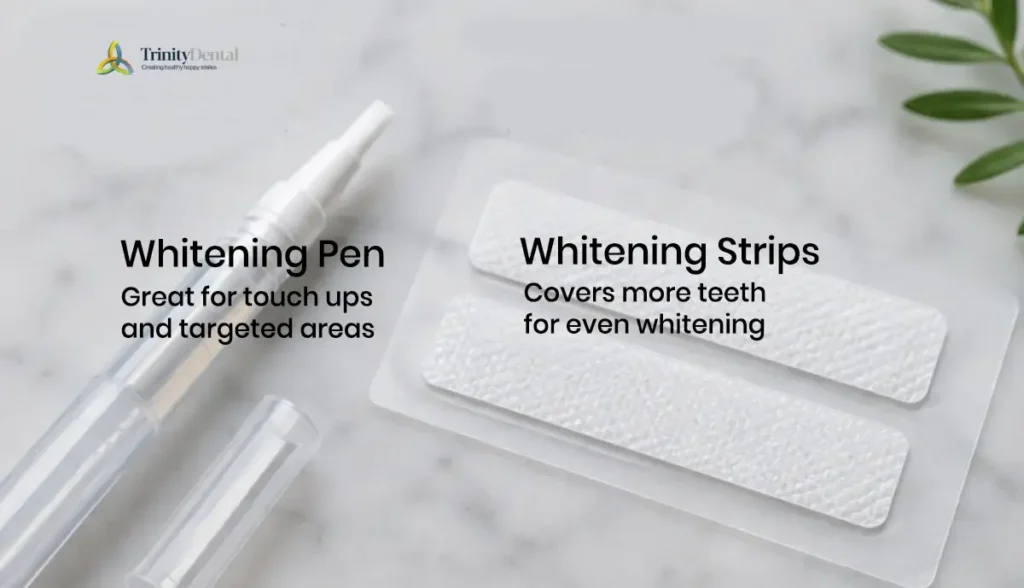
| Precision | Excellent for individual teeth | Covers several front teeth at once |
| Contact time | Usually shorter | Longer contact with enamel |
| Ease of travel | Very convenient | Slightly less convenient |
| Mess | Minimal | Can occasionally slip or fold |
| Whitening consistency | Depends on application | Often more even |
| Touch-ups | Excellent | Less practical |
When a Whitening Pen Makes More Sense
A pen is a good choice if you:
- Need quick touch-ups
- Have one or two teeth with mild staining
- Travel frequently
- Want something small enough to carry every day
- Have already completed professional whitening
When Strips May Be the Better Option
Whitening strips are often more effective when:
- You want to whiten several front teeth evenly
- You don’t mind wearing them for longer
- You’re starting from noticeably yellow teeth
- You’re looking for a more consistent home treatment
Some dentists even suggest combining the two but not at the same time.
For example, strips can be used as the primary whitening treatment over one to two weeks, while a whitening pen becomes the maintenance product every few weeks afterward.
Mistakes Dentists See Again and Again
Most disappointing whitening results have very little to do with the product itself.
They’re caused by habits.
Whitening Dirty Teeth
Plaque acts like a barrier.
If it’s covering the enamel, less whitening gel actually reaches the tooth surface.
Chasing Unrealistic Shades
Natural teeth aren’t printer-paper white.
In fact, healthy teeth often have slight variations in colour from one tooth to another. That’s normal anatomy, not a problem to fix.
Dentists usually aim for a brighter version of your natural smile rather than an unnaturally opaque white.
Using Whitening Pens for Pain
Some people notice a dark tooth and immediately reach for whitening products.
If a tooth has suddenly changed colour especially after an injury that isn’t a cosmetic issue until a dentist determines the cause. The tooth may have lost its blood supply or developed an infection.
Whitening won’t solve that.
Ignoring Diet Afterwards
Whitening isn’t permanent because staining never stops.
Coffee, tea, smoking, red wine, and strongly coloured foods gradually return pigments to the enamel.
One practical habit many dentists recommend is drinking coffee within a shorter time instead of sipping it slowly over several hours. Less contact time means less opportunity for staining.
Rinsing your mouth with plain water after coloured drinks can also make a noticeable difference over months.
Who Should Avoid Teeth Whitening Pens?
Whitening pens aren’t suitable for everyone.
You should speak with a dentist before using one if you have:
- Untreated cavities
- Gum disease
- Significant tooth sensitivity
- Cracked or fractured teeth
- Large areas of exposed roots
- Numerous crowns or veneers on the front teeth
Children should only use whitening products under professional guidance, and anyone who is pregnant or breastfeeding should ask their healthcare provider before starting cosmetic whitening, as evidence regarding routine cosmetic use during these periods remains limited.
What Dentists Usually Recommend Instead
When patients ask whether whitening pens work, many dentists ask a different question first:
“Why do you think your teeth look darker?”
The answer changes the treatment.
- If the problem is surface staining, a whitening pen may be enough.
- If it’s heavy tartar, the first step is a professional scale and polish.
- If the enamel has become thin with age, whitening may help only slightly.
- If there’s an old filling or crown that’s darker than the surrounding teeth, replacing the restoration often produces a better cosmetic result than more whitening.
That’s why the most successful whitening plans begin with diagnosis not shopping.
Frequently Asked Questions
Yes. They can noticeably reduce mild surface stains when used consistently, but they don’t produce the same level of whitening as professional dental treatments.
Many people notice a small improvement within a few days, while more visible changes often appear after one to two weeks of regular use, depending on the product and the type of staining.
Only for the period recommended by the manufacturer or your dentist. Long-term daily use doesn’t usually make teeth whiter and may increase sensitivity.
When used correctly, reputable whitening pens are not considered harmful to healthy enamel. Problems are more likely to occur from excessive or incorrect use.
Neither is universally better. Pens are excellent for maintenance and precise application, while strips generally provide more even whitening across multiple teeth.
Learn More
If you’d like to explore the science behind tooth whitening and professional guidance, these resources are worth reading:
- American Dental Association (ADA): Tooth whitening safety, effectiveness, and professional recommendations.
- NHS (UK): Advice on cosmetic teeth whitening and choosing safe treatments.
Why Choose Trinity Dental?
Choosing a dental practice for teeth whitening isn’t just about getting whiter teeth. It’s about understanding why your teeth have changed colour in the first place.
At Trinity Dental, every smile is assessed individually before recommending treatment. That matters because stains caused by coffee need a different approach than discoloration from ageing, previous dental work, or internal changes within the tooth. Rather than suggesting whitening for everyone, the focus is on identifying the cause and recommending the option most likely to produce a natural-looking result while protecting your enamel and gums.
Whether you’re considering professional whitening or simply want honest advice on whether a whitening pen is worth trying, you’ll receive recommendations based on your oral health not a one-size-fits-all cosmetic solution.
Ready to Brighten Your Smile?
If you’re unsure whether a teeth whitening pen will give you the results you’re hoping for, booking a professional consultation can save both time and money. The team at Trinity Dental can assess your teeth, explain your options clearly, and help you choose the treatment that makes the most sense for your smile.
Book your consultation and discover the safest, most effective way to achieve a naturally brighter smile.