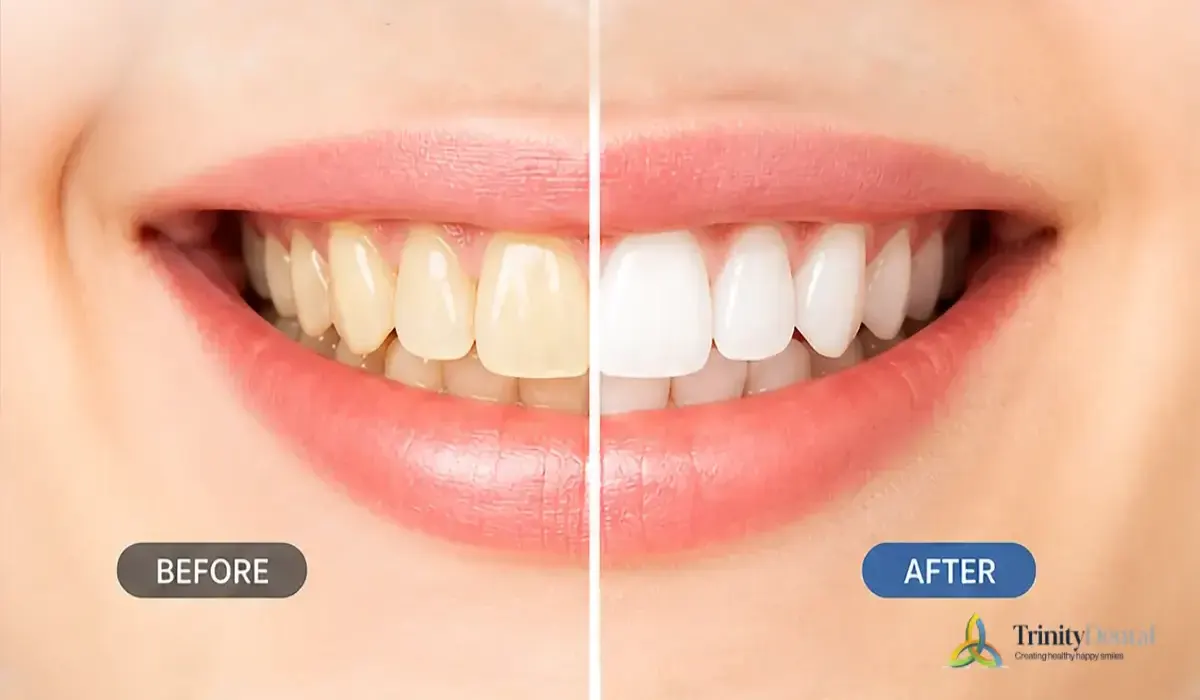
Yellow teeth don’t usually happen overnight. And they don’t disappear overnight either. What you’re seeing is almost always a mix of surface staining and deeper enamel changes that build up quietly over time.
The honest answer to how to get rid of yellow teeth is this: you don’t “whiten” your way out of it in one trick. You reverse layers. Some come off easily. Some don’t budge without professional help.
And yes, brushing every day doesn’t guarantee white teeth. That’s one of the most frustrating truths people run into.
Why are my teeth yellow when I brush them everyday
Brushing only removes part of the problem.
Most people assume yellow teeth mean “dirty teeth”, but that’s not accurate. A lot of yellowing sits under or inside the enamel, not on top of it.
Here’s what’s usually going on:
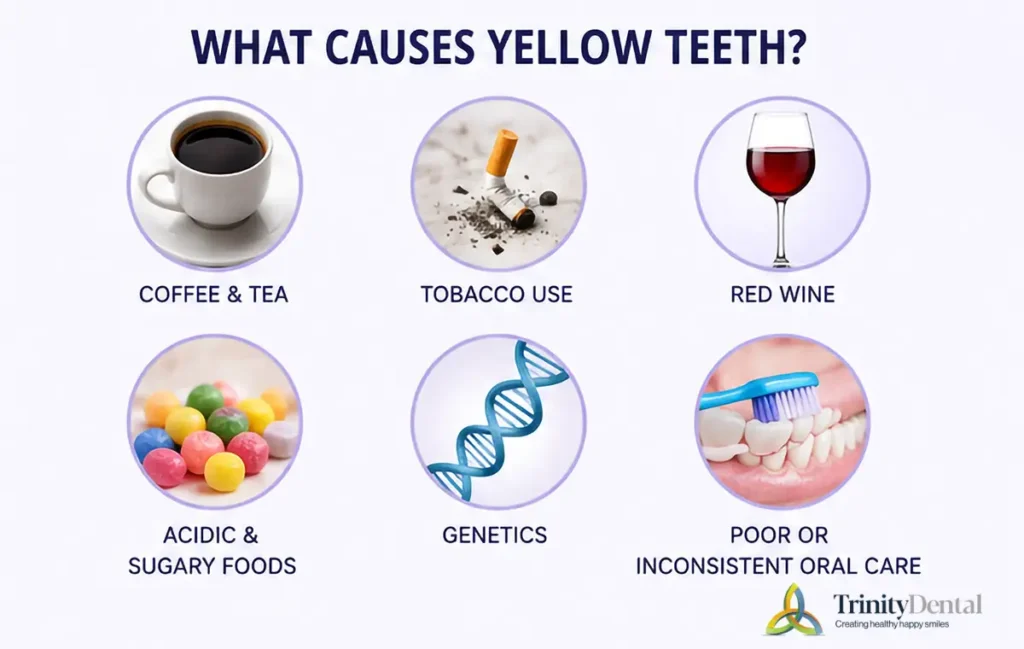
- Enamel thinning: As enamel wears down, the naturally yellow dentin underneath starts showing more.
- Staining from diet: Tea, coffee, cola, and even spices like turmeric slowly tint enamel.
- Tobacco use (even occasional): Nicotine binds aggressively to enamel.
- Wrong brushing technique: Too soft doesn’t clean stains; too hard wears enamel away.
- Acidic food cycle: Acid softens enamel, making it easier for stains to lock in.
A dentist will often tell you something slightly uncomfortable here: some people are brushing regularly but actually polishing stains deeper because they brush right after acidic meals when enamel is temporarily weakened.
How to get rid of yellow teeth (what actually works in real life)
There’s no single method. It’s layers again.
Think of it like this: surface stains first, then deeper discoloration, then structural color of enamel.
If you try only one approach, results are usually mild.
Step 1: Remove surface buildup properly
This is where most “yellow teeth” actually live.
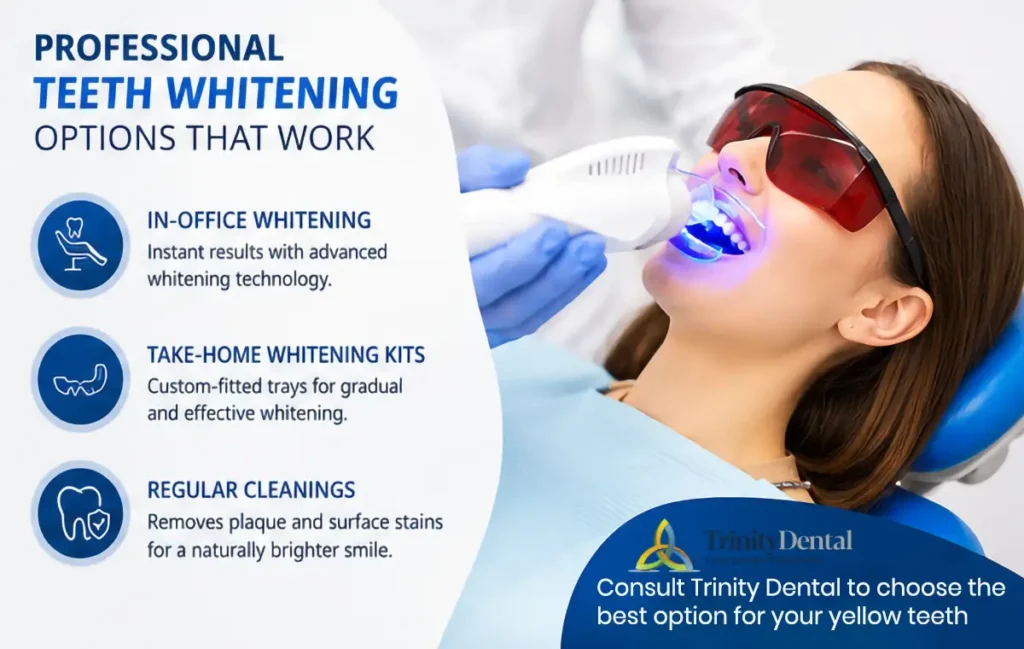
- Professional cleaning (scaling + polishing)
- Proper electric brushing (not just manual brushing)
- Interdental cleaning (floss or picks)
You’d be surprised how often a “yellow teeth problem” disappears after a basic cleaning session. Not whitening, just cleaning.
Step 2: Target embedded stains
Once buildup is gone, you deal with slow discoloration inside enamel pores.
This is where lifestyle and home methods matter more than people think.
- Cut down constant sipping of tea/coffee
- Rinse mouth with water after colored drinks
- Switch to fluoride toothpaste (not “whitening marketing” ones)
- Avoid brushing immediately after acidic foods
Small habit, big difference: waiting 30 minutes after eating before brushing.
That alone prevents enamel abrasion that locks stains in.
How to clean yellow teeth at home
Home care can help, but only if you treat enamel like something fragile, not something you scrub.
Here’s what actually helps:
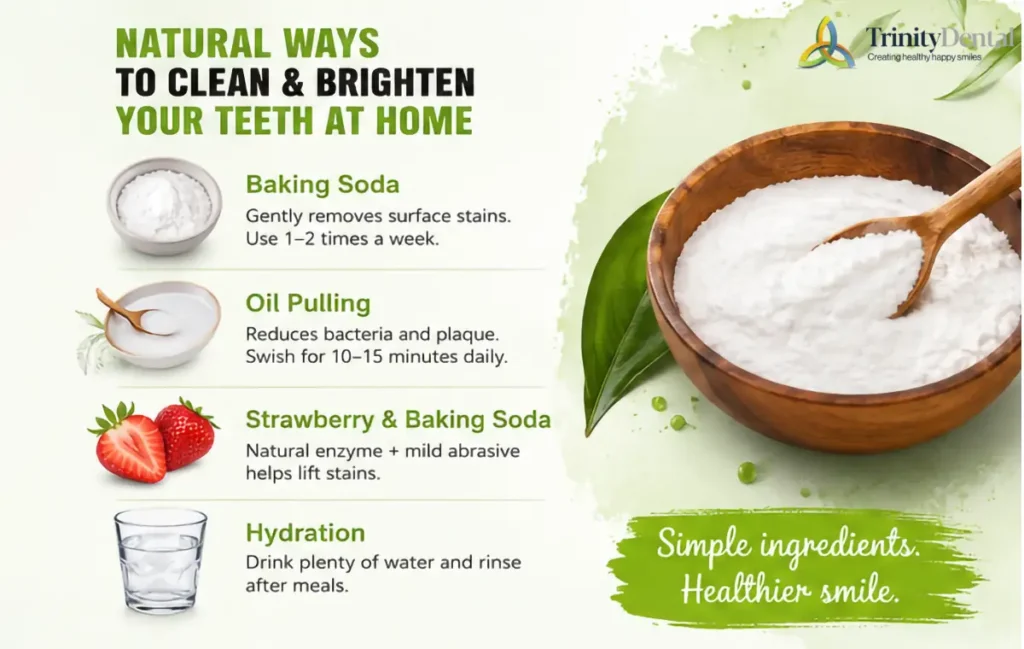
1. Oil pulling (mild but real effect over time)
Not magic. But it reduces plaque biofilm, which holds stains.
- Sesame or coconut oil
- 10–15 minutes
- Morning before eating
It won’t whiten dramatically, but it reduces dullness.
2. Activated charcoal (limited use only)
It works by adsorption, not bleaching. But here’s the catch, overuse can scratch enamel.
Use it rarely. Think once a week, not daily.
3. Hydrogen peroxide rinses (low concentration only)
This is closer to actual whitening chemistry.
Low concentration mouth rinses can help oxidize stains gradually.
How to remove yellow stains from teeth instantly
“Instant” is a tricky word in dentistry.
What you can get instantly is surface brightening, not true whitening.
Here’s what works fast:
- Professional polishing (same-day visible change)
- Air polishing (removes coffee/tea stains quickly)
- Whitening toothpaste with optical brighteners (temporary effect)
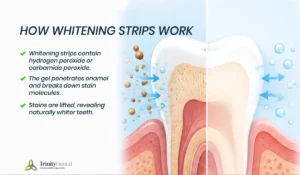
- Mild peroxide strips (short-term improvement over hours to days)
Dentists sometimes use polishing paste that removes a surprising amount of discoloration in one sitting. Patients often expect whitening gels, but polishing alone changes the shade more than expected if stains are surface-level.
How to get rid of yellow teeth with baking soda
Baking soda is one of those things people either overuse or misunderstand completely.
It works because:
- It’s mildly abrasive
- It helps neutralize acids
- It disrupts surface stain layers
But here’s the reality most blogs skip:
If you use it too often, you thin enamel faster than you whiten teeth. That leads to more yellowing over time, not less.
Safe way to use baking soda:
- 1–2 times per week max
- Mix with water or toothpaste
- Gentle brushing only (no pressure)
How to get rid of yellow teeth permanently
“Permanent” is where expectations need adjusting.
Teeth naturally change color over time. You can’t freeze them. But you can control the baseline.
Long-term whitening actually comes from consistency, not one treatment.
What works long-term:
- Regular professional cleaning (every 6–12 months)
- Night guards if you grind teeth (enamel protection matters more than whitening)
- Limiting chromogenic drinks (tea/coffee timing matters more than quantity)
- Professional whitening treatments when needed
- Fluoride or hydroxyapatite toothpaste for enamel strengthening
Hydroxyapatite toothpaste is underrated, it helps rebuild enamel surface smoothness, making teeth reflect light better (brighter appearance, not just “whiter”).
What most people miss about yellow teeth
This part doesn’t get talked about enough.
Two people can have identical habits and still have different tooth color because:
- Enamel thickness is genetic
- Saliva composition affects staining speed
- Some medications darken teeth internally
- Aging naturally reduces enamel density
So when someone says “why are my teeth yellow even though I take care of them”, it’s often biology, not hygiene failure.
what helps vs what doesn’t
| Method | Works for surface stains | Works for deep stains | Safe for enamel |
|---|---|---|---|
| Brushing properly | Yes | No | Yes |
| Baking soda | Yes | Limited | Only occasionally |
| Whitening strips | Yes | Mild | Moderate use |
| Dental cleaning | Yes | Sometimes | Yes |
| Oil pulling | Mild | No | Yes |
| Peroxide whitening | Yes | Yes | Controlled use |
Frequent questions people actually ask about yellow teeth
Water doesn’t whiten teeth, but it plays a quiet protective role. It helps wash away staining particles from food and drinks before they settle on enamel. People who sip water after coffee or tea usually notice slower staining over time.
Mouthwash helps reduce bacteria and freshen breath, but it has very little effect on actual tooth color. Some cosmetic mouthwashes give a temporary clean feeling, but they don’t remove deep stains or tartar buildup.
No. Many people assume that, but it’s not always true. Genetics, enamel thickness, diet, and even age can influence tooth color. Some people with excellent hygiene still have slightly yellow-toned teeth naturally.
Indirectly, yes. Stress can lead to habits like teeth grinding, dry mouth, or irregular oral care routines. Dry mouth especially reduces saliva, which normally protects against staining and bacteria buildup.
Lighting plays a big role. Camera flashes, filters, and angles can exaggerate whiteness or dullness. Natural lighting often shows true enamel tone, which is why teeth can look different in mirrors vs photos.
Yes. Stained teeth usually have surface discoloration from external sources like food or smoking. Yellow teeth often refer to deeper enamel tone changes. Stains can be removed more easily, while natural yellowing is harder to change.
Why choose TRINITY DENTAL
Some dental clinics focus heavily on procedures. Others focus only on cosmetic results. The better ones sit somewhere in between, where treatment decisions are made based on what actually makes sense for the patient, not just what looks good in a brochure.
TRINITY DENTAL’S approach is more grounded. You’re not pushed into unnecessary whitening treatments if a simple cleaning will do the job. And if deeper whitening is needed, it’s explained clearly, what will change, what won’t, and what kind of result is realistic for your specific enamel type.
The focus is on predictable outcomes, not overpromising. That matters more than most people realize when it comes to cosmetic dental work.
If yellowing teeth are bothering you or you’re unsure what level of treatment you actually need, a proper check is usually the smartest starting point.
Book a consultation with TRINITY DENTAL and get a clear, honest assessment of what’s causing the discoloration and what can realistically be done about it without unnecessary treatments.