Tear trough filler has become one of London’s most sought-after treatments for refreshing tired eyes, reducing hollowness, and restoring youthful volume. This comprehensive guide explains how the procedure works, what results you can expect, treatment risks, safety considerations, and the science behind hyaluronic acid fillers supported with trusted research and expert insights
This guide helps you feel informed, confident, and understand exactly how our Tear Trough Filler treatment can benefit you..
What Is Tear Trough Filler?
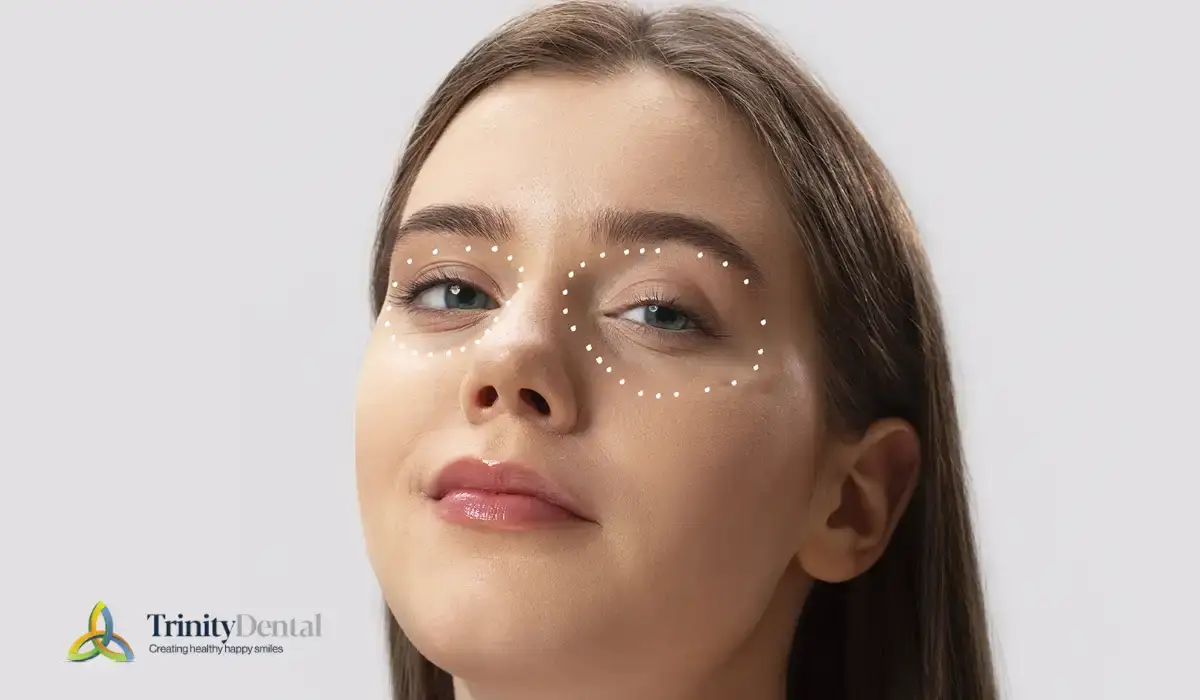
Tear trough filler is a non-surgical injectable treatment using hyaluronic acid (HA) dermal fillers to treat under-eye hollows, dark shadows, and volume loss. As we age, the fat pads beneath the eyes decrease, the skin thins, and the junction between the lower eyelid and cheek becomes more prominent. This creates a tired or sunken look even when you feel well-rested.
Hyaluronic acid is a naturally occurring substance in the skin that binds to water and restores volume instantly. Modern fillers are soft, flexible, and specifically designed for the delicate under-eye area. When placed correctly by a trained clinician, the transition from eyelid to cheek becomes smoother, brighter, and more youthful.
Before-and-After: What Results to Expect
Professional tear trough filler treatment offers subtle, natural-looking changes. Most people notice:
- Reduced hollowness and shadowing
- Brighter, smoother under-eye skin
- Less contrast between the lower lid and cheek
- A refreshed, well-rested look
- Visible improvement immediately after treatment
- Full settling within 7–14 days
Tear Trough Filler Before and After Images
See real tear trough filler before and after images showcasing how treatment can brighten the under-eye area, reduce hollows, and soften dark circles. These collages highlight natural, refreshed results across different individuals, helping you see the treatment’s effectiveness in real cases.


How Tear Trough Filler Works (The Science)
Under-eye ageing occurs due to ligament laxity, volume loss in the midface, thinning of the skin, and decreased collagen. Multiple medical studies confirm that HA fillers effectively restore lost volume and improve infraorbital hollowing.
Key scientific references:
These peer-reviewed studies support the safety and efficacy of professionally administered tear trough treatments.
- Hyaluronic acid gel injections for tear trough deformity: multicenter observational study: this large study treated 1,200 tear‑trough deformities and found that HA injections provided durable aesthetic improvement for up to a year. PubMed
- Efficacy and Safety of Hyaluronic Acid Injection in Tear Trough Deformity: A Meta‑analysis: a 2023 meta‑analysis of 31 studies (2,556 participants) reporting a 91% pooled satisfaction rate and low overall complication rates (bruising, swelling, lumps very uncommon). PubMed
- Dermal Fillers for the Treatment of Tear Trough Deformity: A Review of Anatomy, Treatment Techniques, and Their Outcomes: a thorough literature review summarizing best practices, filler selection, injection techniques, safety precautions, and long‑term outcomes of HA tear‑trough fillers. PMC
- Quantitative Evaluation of Improvement of Tear Trough With a Non‑Cross‑Linked Sodium Hyaluronic Compound: 3D & MRI Analysis: a recent proof‑of‑concept study showing measurable, sustained volume increase and high patient satisfaction 6 months after treatment using non‑cross‑linked HA filler. Ovid
Who Is a Good Candidate?
You may be suitable for tear trough filler if you have:
- Sunken or hollow under-eyes
- Noticeable dark shadows caused by volume loss
- A tired appearance despite good sleep
- Early signs of ageing
- Mild skin laxity or thinning
- Good overall skin quality
People with severe laxity or excessive swelling may require alternative approaches. A professional consultation determines the safest and most effective plan.
Benefits of Tear Trough Filler
| Benefit | Why It Matters |
|---|---|
| Instant improvement | You see changes immediately after injection. |
| Non-surgical | No downtime, no incisions, minimal discomfort. |
| Natural look | Soft HA filler blends seamlessly with delicate under-eye tissue. |
| Reversible | HA fillers can be dissolved with hyaluronidase if needed. |
| Long-lasting | Results typically last 9–18 months. |
| Brightens eyes | Reduces shadows and tired appearance. |
| Boosts confidence | Subtle enhancement that looks like “you, but refreshed.” |
Treatment Overview
Procedure time: 20–30 minutes
Results visible: Immediately
Final result: 1–2 weeks
Anaesthetic: Optional topical numbing
Downtime: Minimal
Longevity: 9–18 months
Our experts will carefully assess your anatomy, select the appropriate filler, and perform the procedure using a micro‑cannula or fine needle to ensure precise, safe, and natural results.
How Much Filler Do You Need?
Only an experienced professional can determine the exact amount of filler based on a personalised assessment of your under-eye anatomy, hollowness, and aesthetic goals. The goal is always to achieve natural, subtle, and balanced results. Staged sessions may be recommended if needed, ensuring safety and precision without using more filler than necessary.
Procedure Steps (What Happens During Treatment)
- Consultation: Anatomy analysis, medical history, suitability check.
- Marking: Identifying ligaments, vessels, and safe injection zones.
- Numbing: Topical anaesthetic applied if needed.
- Injection: Using a soft micro-cannula or needle to place HA filler precisely along the tear trough.
- Moulding: Gentle reshaping ensures smooth blending.
- Aftercare guidance: Instructions to promote optimal healing.
How Long Do Results Last?
Most patients enjoy results for 9–18 months, depending on:
- metabolic rate
- filler type
- lifestyle factors
- smoking/alcohol use
- hydration
- general health
- midface support
Scientific studies show HA fillers maintain visible improvement for long periods due to hydration and collagen-supporting effects.
Aftercare: What to Expect Post-Treatment
You may experience:
- mild swelling
- minimal bruising
- slight tenderness
- temporary asymmetry (settles within days)
These are normal responses and resolve quickly.
Do not:
- rub the area
- use saunas/steam for 24–48 hours
- do intense exercise same day
- apply heavy makeup immediately
- sleep face-down
Our aesthetic experts at Trinity Dental will guide you on proper post-treatment care, including hydration and SPF, to support safe healing and maintain long-lasting results.
Risks & Safety Considerations
Every medical procedure carries some risk, but our treatment has a strong safety profile as this is done by only trained professionals.
Possible risks include but uncommon at Trinity Dental :
- bruising
- swelling
- contour irregularities
- Tyndall effect (bluish tint if filler is too superficial)
- asymmetry
- under-correction or over-correction
Rare risks (with improper technique):
- vascular occlusion
- prolonged swelling
- nodule formation
Peer-reviewed studies consistently show low complication rates when performed by qualified clinicians using appropriate filler types.
Filler Migration: What the Research Says
Filler migration is a topic frequently mentioned online, but the evidence shows it is:
rare, treatable, and mostly linked to improper technique, not the filler itself.
Medical papers highlight that the highest safety results occur when:
- the correct HA filler is used
- minimal pressure and slow injections are applied
- injections are placed deep, not superficially
- a cannula is used where beneficial
Professionals follow these protocols to significantly reduce risks.
Comparison: Tear Trough Filler vs Surgical Options
| Feature | Tear Trough Filler | Lower Blepharoplasty (Surgery) |
|---|---|---|
| Non-surgical | ✔ | ✘ |
| Immediate results | ✔ | ✘ |
| Downtime | Minimal | 1–2 weeks |
| Reversible | ✔ | ✘ |
| Longevity | 9–18 months | Permanent |
| Ideal for | Volume loss, mild–moderate hollows | Severe sagging or large fat herniation |
Why Tear Trough Filler Is So Popular in London
Londoners often experience stress, long commutes, and late nights contributing to tired-looking eyes. Tear trough filler offers a quick, effective, and natural way to refresh the face without downtime.
FAQ
It is an extremely rare complication. Choosing a medically trained injector familiar with facial anatomy greatly minimizes this risk.
Alternatives include PRP, skin boosters, laser treatments, chemical peels, and surgical lower blepharoplasty for more severe concerns.
Tear trough filler typically lasts 9–18 months, depending on metabolism, filler type, and lifestyle. Many patients maintain results with yearly touch-ups.
Most people feel only mild pressure or slight discomfort. Aesthetic practitioners commonly apply numbing cream to keep the treatment comfortable.
Complications are uncommon but can include swelling, asymmetry, lumps, or overfilling. Choosing a trained medical professional significantly reduces risk.
Swelling typically improves within 3–5 days, with full settling in 1–2 weeks.
Yes. Hyaluronic acid fillers can be safely dissolved using hyaluronidase if corrections are needed.
A soft, flexible hyaluronic acid filler (such as Restylane or Teosyal Redensity 2) is commonly recommended because it integrates naturally into delicate under-eye tissue.
Makeup should be avoided for the first 24 hours, especially around the injection area, to reduce the risk of irritation or infection.
It improves shadowing from hollowness, which makes dark circles look lighter. Pigmentation-based dark circles may require chemical peels, laser, or skincare.
Why Choose Trinity Dental for Tear Trough Filler
Our experts use medically proven techniques, advanced anatomical knowledge, and premium HA fillers formulated specifically for the delicate under-eye region. Patients choose us because we deliver:
- natural-looking, balanced results
- a personalised approach tailored to your anatomy
- treatments based on medical research and precision
- a safe, comfortable environment
- long-term under-eye rejuvenation
Expert-led care ensures your treatment is performed with absolute precision, safety, and artistry giving you refreshed, bright, and natural under-eye results. Contact us today to book your consultation.